
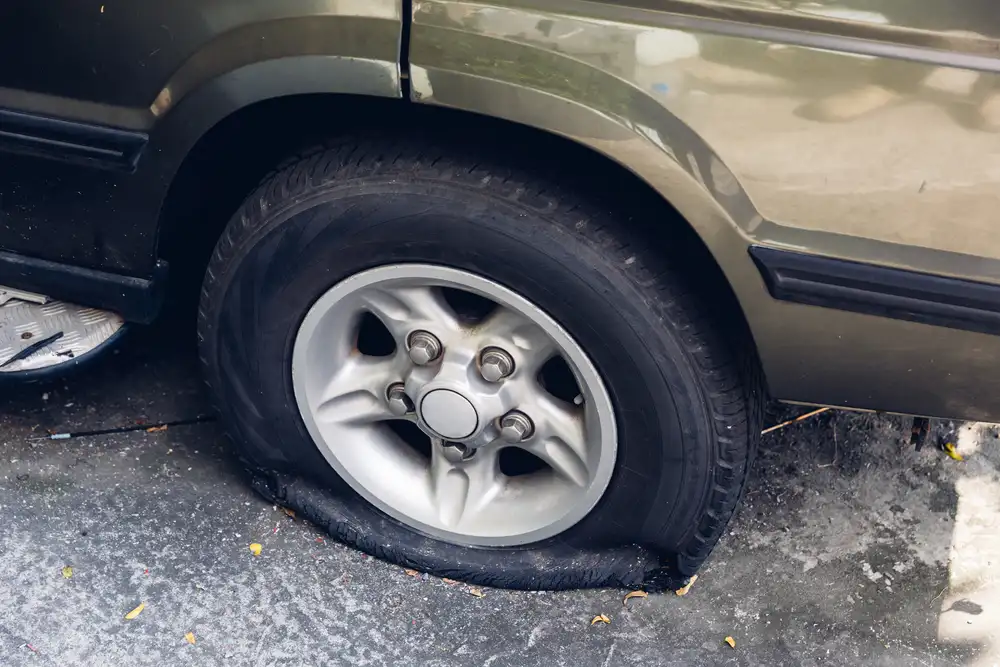
Checking tire pressure is a simple procedure that many car owners neglect. And in vain, because not only the durability of the tire, but also the safety of movement on the road depend on this indicator. You should monitor the pressure level regularly, and occasionally measure it on an unscheduled basis..
In summer, it is very important to maintain the optimal level of pressure in the car tires to ensure comfortable driving and road safety. You should check the tire pressure regularly, because many factors depend on it – vehicle controllability, tire wear, fuel consumption and overall safety on the road. Insufficient or excessive pressure can provoke a dangerous situation on the road – instability when maneuvering, slippage, deterioration of traction with the road surface.
What does it depend on?
According to standards, tire pressure should remain consistent regardless of the season and typically range between 2.0–2.8 atmospheres (29–41 psi). However, readings may change under the influence of the following factors:
🌡️ 1. Changes in seasons
According to observations, temperature fluctuations within 10 degrees lead to a pressure change of 0.1 bar (1 bar = 0.989 atm). In the summer, in hot air, the tires warm up, the pressure increases. For example, if the tires were inflated to 2 atm at a temperature of +5°C, then in the summer, in air heated to +35°C, the rubber will be overinflated to 2.5 atm.
🚗 2. Car load levels
The tire pressure standards for a loaded and unloaded car are determined by the manufacturer. You can find the indicators on special stickers located on the driver’s door, inside the gas cap, in the glove compartment. The data is also provided in the vehicle’s registration certificate, in the QR code, by scanning which you can go to the manufacturer’s website and find out the necessary information. The general rule is that a loaded car’s tires should be inflated more than an unloaded one.
🛣️ 3. Road condition
On dirt roads, off-road, rough terrain, loose sand, where improved grip is required, and not the speed of the car, it is better to release the pressure a little to increase the contact patch.
🏎️ 4. Driving style
During sharp maneuvers, high speed, the tires heat up, the pressure in them increases. If they were previously overinflated, then the probability of tire rupture increases, which is fraught with an accident.
Features of tire pressure regulation in summer
It is recommended to adjust the tire pressure depending on the quality of the roads you have to drive on. For example, when driving on bad roads, it is worth reducing the pressure to improve the car’s cross-country ability in mud. And, conversely, on good asphalt roads such as motorways, and highways, the pressure can be increased.
When planning a trip across different terrains and, accordingly, roads of different types, it is better to adhere to the pressure values recommended by the car manufacturer. But, for example, when driving on sandy roads, mud, swampy terrain, off-road, you should reduce the pressure in the tires to improve the vehicle’s cross-country ability.
In summer, you should monitor and regularly measure the tire pressure more carefully, as it can increase in hot weather, especially during long trips, due to the temperature of the asphalt, heating of the tires in the sun, during movement and with increased load on the wheel. Therefore, it is recommended to check the tire pressure regularly, especially during long trips and at high temperatures.
👉 Stay safe this summer—visit Dallas Complete Auto in Lancaster, Dallas for a quick tire pressure check and expert advice!
Experienced drivers advise slightly under-inflating tires in the summer to compensate for the increased pressure in extreme heat. Since in summer many car owners actively use their car to transport cargo and things, they often overload and load the car, using trailers and luggage racks.
Overloading the car has a negative effect on the condition of the rear tires, so in this case you should increase the pressure in them by 0.2 bar. Under- and over-inflated tires in the summer can lead to negative consequences, such as:
- ✅ Uneven wear of tires
- ✅ Reduced tire life
- ✅ Deterioration of road grip and vehicle control
- ✅ Increased fuel consumption
- ✅ Overheating of the rubber, and in some cases, rupture
When over-inflated tires wear out, the center of the tire wears out; when under-inflated tires wear out, the edges of the wheel wear out. If the pressure in all wheels is different, the vehicle will tend to move towards the most deflated wheel, which will impair the vehicle’s handling and lead to an emergency situation on the road.
Finally, we note how important it is to control the optimal pressure in the car tires in the summer, especially in the heat and sun. Moreover, this contributes not only to safe road traffic, but also to maintaining the integrity of the tires and increasing their service life. Remember that road safety depends on you and careful attention to the technical condition of your car.
🔧 Features of Tire Pressure Regulation in Summer
✅ Adjust tire pressure based on road quality:
- Lower the pressure when driving on rough, muddy, or off-road terrain to improve traction and comfort.
- Increase pressure when driving on smooth asphalt roads, such as highways and motorways, for better handling and fuel efficiency.
✅ Follow manufacturer-recommended pressure:
- Stick to the car manufacturer’s pressure guidelines when driving across mixed terrain or varying road types.
✅ Monitor pressure more frequently in hot weather:
- Summer heat, hot asphalt, and long-distance driving can increase tire pressure.
- Regularly check and adjust tire pressure, especially during long trips or high temperatures.
✅ Consider slightly under-inflating tires during extreme heat:
- This helps offset pressure increases caused by temperature expansion.
- Be cautious not to go too low, which can reduce control and increase wear.
✅ Increase rear tire pressure if carrying heavy loads:
- In summer, many cars are overloaded with cargo, trailers, or roof racks.
- Increase rear tire pressure by approximately 0.2 bar to handle added weight safely.
⚠️ Avoid driving with under- or over-inflated tires:
- Both conditions can lead to uneven tread wear, poor handling, higher fuel consumption, and increased risk of tire failure.
Driving in the Dallas heat?
The dangers of driving on flat and over-inflated tires
At normal pressure, which does not exceed the limits set for a specific car manufacturer, the tread wears evenly. On a straight section of the road, the central part enters the contact patch, on turns and maneuvers – the lateral part.
If the tire pressure is below the established norm, the contact patch becomes larger and shifts to the sidewalls. The central part of the rubber is crushed. This leads to the following consequences:
- 🛞 Increased contact with sidewalls: The tire’s contact patch expands and shifts toward the sidewalls, causing stress on areas not designed for prolonged load.
- 🔧 Deformation of the tread center: The central portion of the tire compresses and deforms, leading to uneven wear and reduced performance.
- 🔥 Excessive heat buildup: More friction results in heat accumulation, raising the risk of tire blowouts – especially during high-speed or long-distance summer driving.
- 🛑 Reduced handling and braking efficiency: Vehicle response becomes sluggish, particularly in cornering or emergency maneuvers.
- 💸 Shortened tire lifespan: Faster wear on the outer tread edges leads to premature replacement and increased maintenance costs.
- ⛽ Higher fuel consumption: Increased rolling resistance requires more energy from the engine, reducing fuel efficiency.
With excess pressure in the tires, the contact patch, on the contrary, decreases, and the central part of the tread, which comes into contact with the road surface, wears out intensively. Fuel consumption decreases, but the following disadvantages arise during operation:
- 🛞 Reduced contact patch: Only the central part of the tread touches the road, leading to uneven and accelerated center tread wear.
- 💥 Increased risk of tire damage: Over-inflated tires are more vulnerable to punctures, impacts from potholes, and sidewall cracking.
- 🚗 Harsher ride quality: Less tire flex results in a stiffer, bumpier ride, especially on uneven or rough roads.
- 🛑 Decreased traction and grip: A smaller contact area reduces traction, especially in wet or emergency braking conditions.
🔄 Reduced handling performance: Less tire surface on the road can lead to reduced cornering stability and control.
How often should you check the pressure in your car tires?
Regularly checking your tire pressure is a simple yet crucial step to ensure safe driving, optimal fuel efficiency, and longer tire life. So, you should check the tire pressure at least once a month, and preferably once every two weeks. This is mandatory before every long trip.
1. Checking equals saving
However, checking the pressure is often forgotten or checked “by eye”, which is an inaccurate method. Although factory tire pressure sensors are becoming increasingly popular, their readings are not always reliable.
Meanwhile, maintaining the correct pressure is not only a matter of safety. Perhaps the economic argument will appeal more to the imagination – a car with underinflated tires burns more fuel, and the rubber wears out faster. The car’s performance also deteriorates.
2. When to check the pressure?
Although the most common mistake is too low pressure, it can also happen that the tire is overinflated. Then driving comfort drops noticeably, and the tires can be damaged. So, you should check the tire pressure when the tires are cold. The recommended values specified by the manufacturer apply to cold tires.
3. Natural pressure changes
You should also pay attention to weather conditions. The question is: should tires be more or less inflated due to high temperatures? Tire pressure changes between measurements depending on external conditions.
In addition to common causes such as leaky valves or damaged rims, the cause is a slow air leak through microscopic spaces in the tire walls. In addition, air is compressed at low temperatures and expands at higher temperatures, which causes the pressure to change depending on the temperature. When it’s hot, it rises.
Choosing tires for the summer season
Correct tire pressure is important, but so is the correct choice of tires, especially in summer. To ensure maximum traction in hot weather, prevent aquaplaning in rain, and provide optimal braking, it is recommended to use summer tires. They have a rubber compound and tread pattern that are specially designed for high temperatures.
Choosing the right summer tires enhances not only safety but also fuel efficiency and overall driving comfort. Unlike all-season tires, summer tires offer better grip, shorter braking distances, and improved handling on hot, dry, or wet roads.
At Dallas Complete Auto in Lancaster, Dallas, TX, our experts can help you select and install the ideal summer tires for your vehicle, ensuring top performance throughout the season.
Frequently asked questions (FAQs)
You should check your tire pressure at least once a month, and ideally every two weeks during hot summer months in Dallas. Always check before long trips or when your car is heavily loaded to ensure safety and prevent tire damage.
The optimal tire pressure for most vehicles ranges between 2.0 and 2.8 atmospheres (29–41 psi), depending on the manufacturer. In summer, monitor pressure closely as heat can cause inflation levels to rise due to tire expansion.
Driving with under- or over-inflated tires can cause uneven wear, reduced grip, longer braking distances, overheating, blowouts, poor fuel economy, and loss of vehicle control—especially in Dallas’s hot summer conditions.
Yes. Lower tire pressure slightly for off-road, muddy, or sandy terrain to improve traction. For highways and well-paved Dallas roads, keep tires at or slightly above the manufacturer’s recommended pressure for stability and fuel efficiency.
Absolutely. Summer heat causes air to expand, increasing tire pressure. For every 10°C (18°F) temperature rise, pressure can increase by about 0.1 bar. Regular monitoring helps prevent over-inflation and tire blowouts in extreme heat.